CID
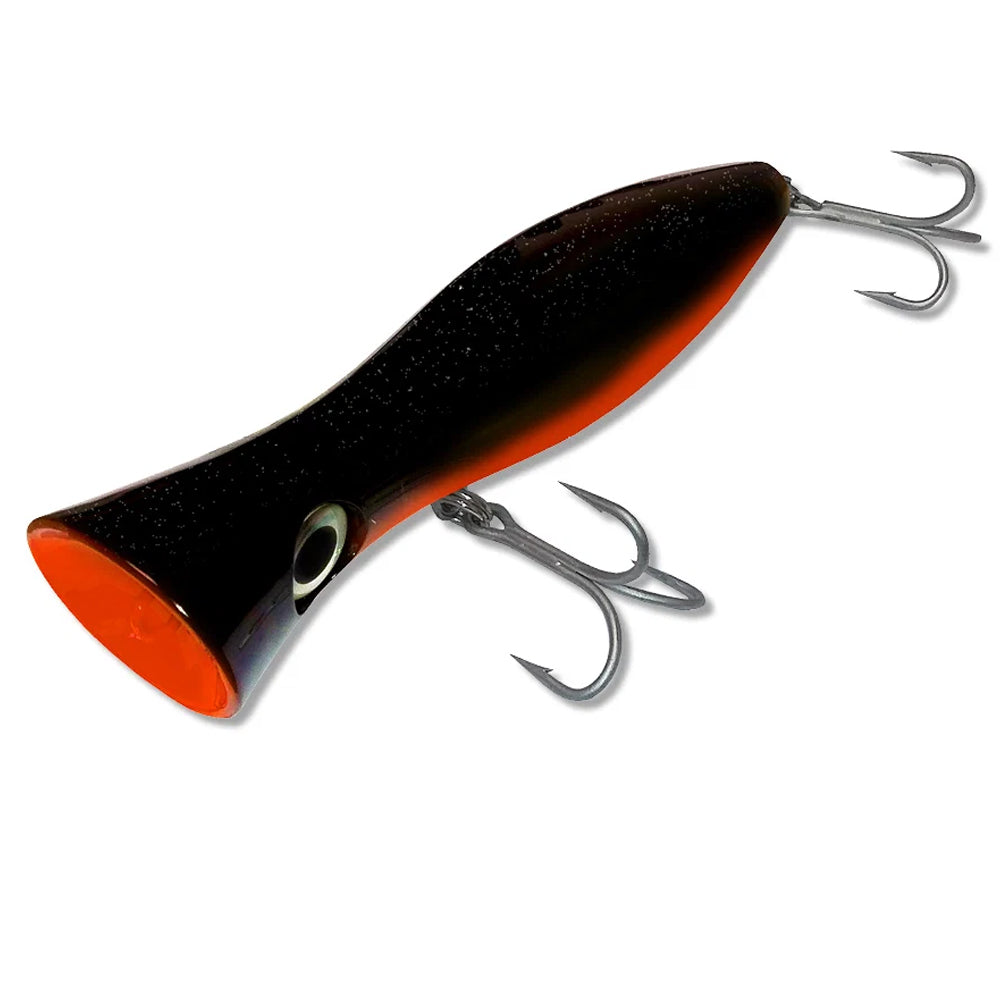
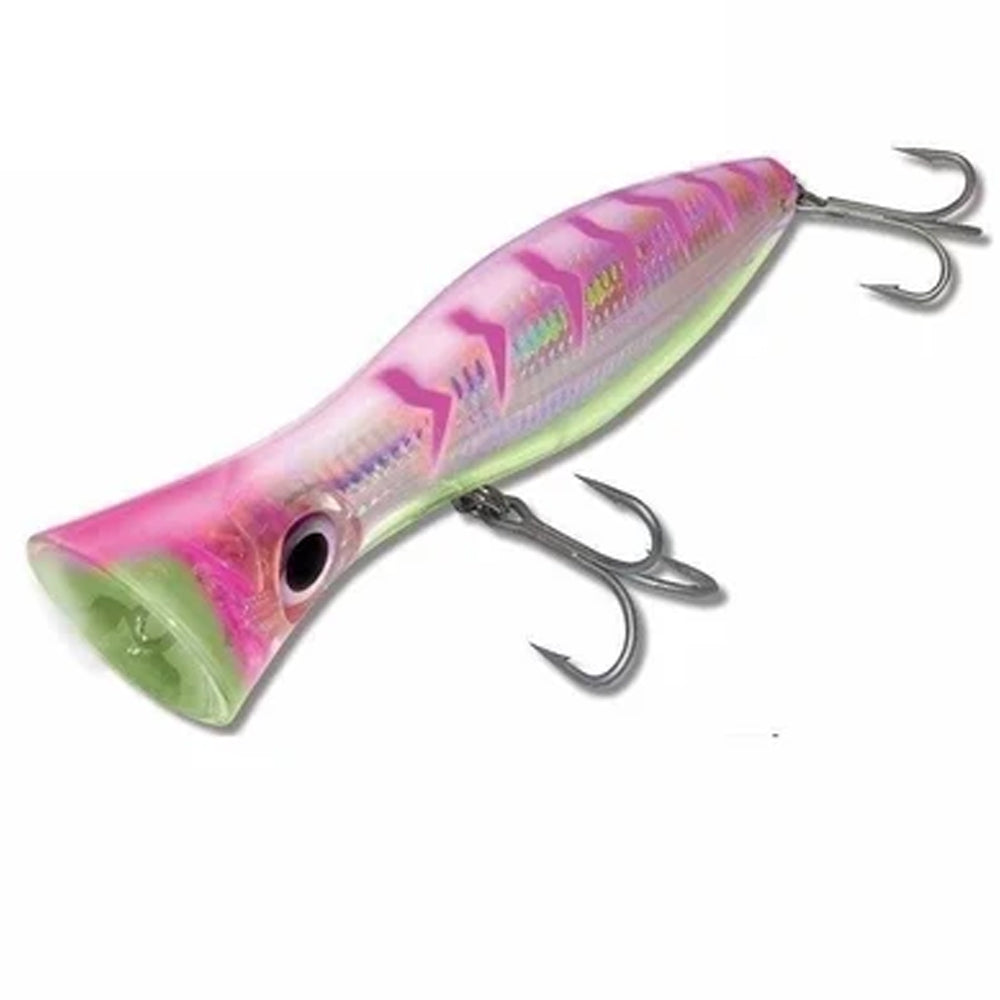
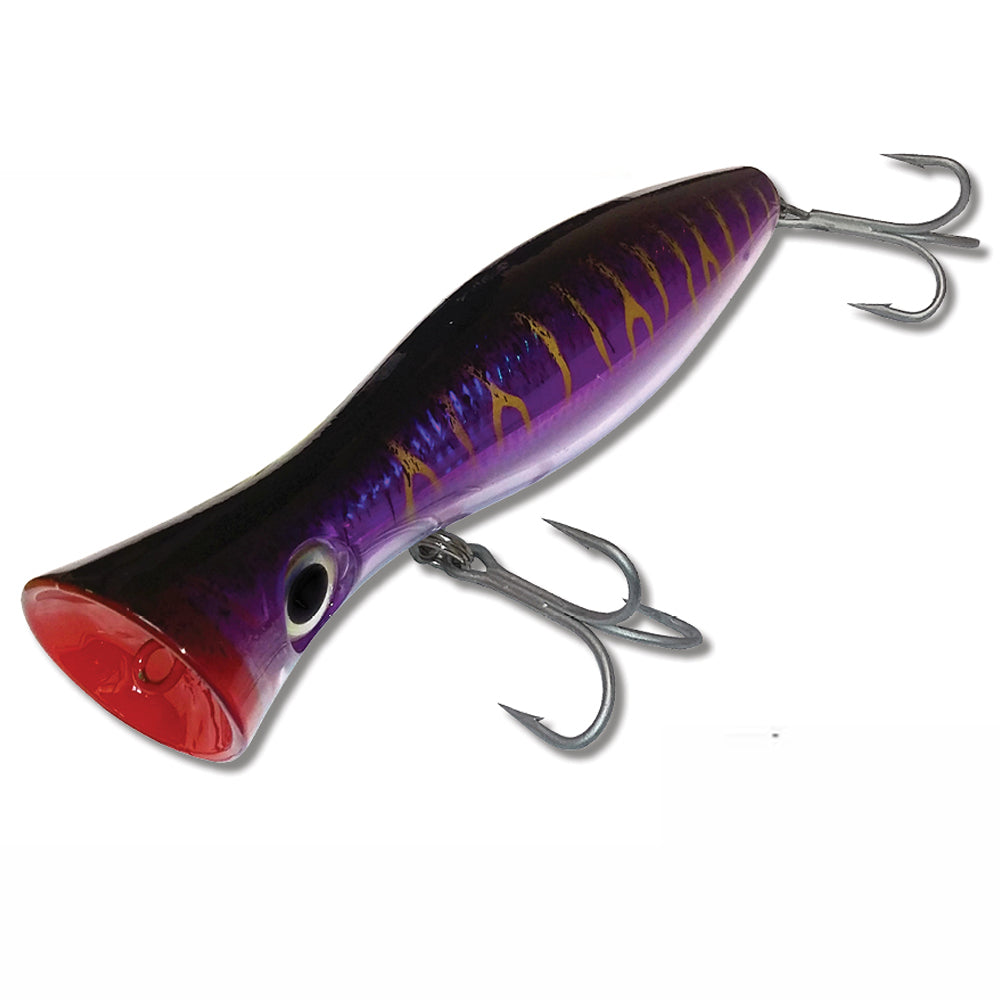
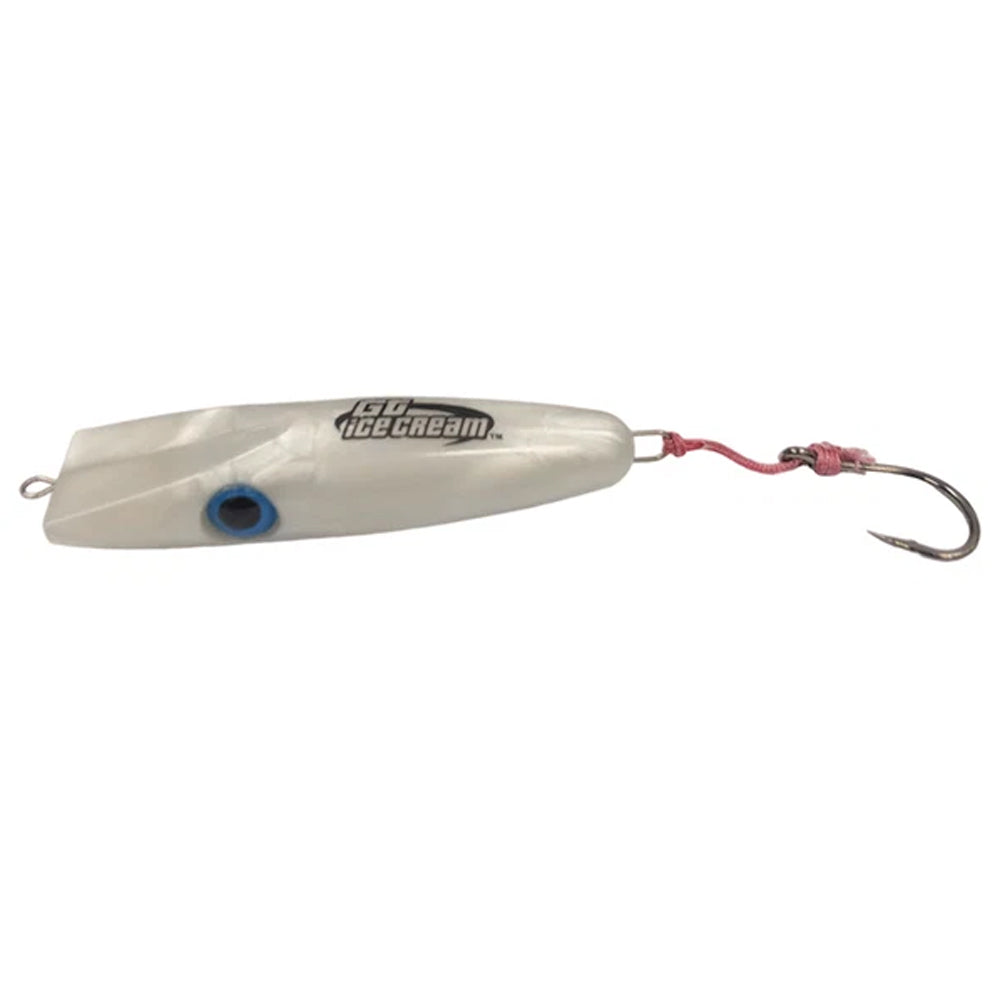
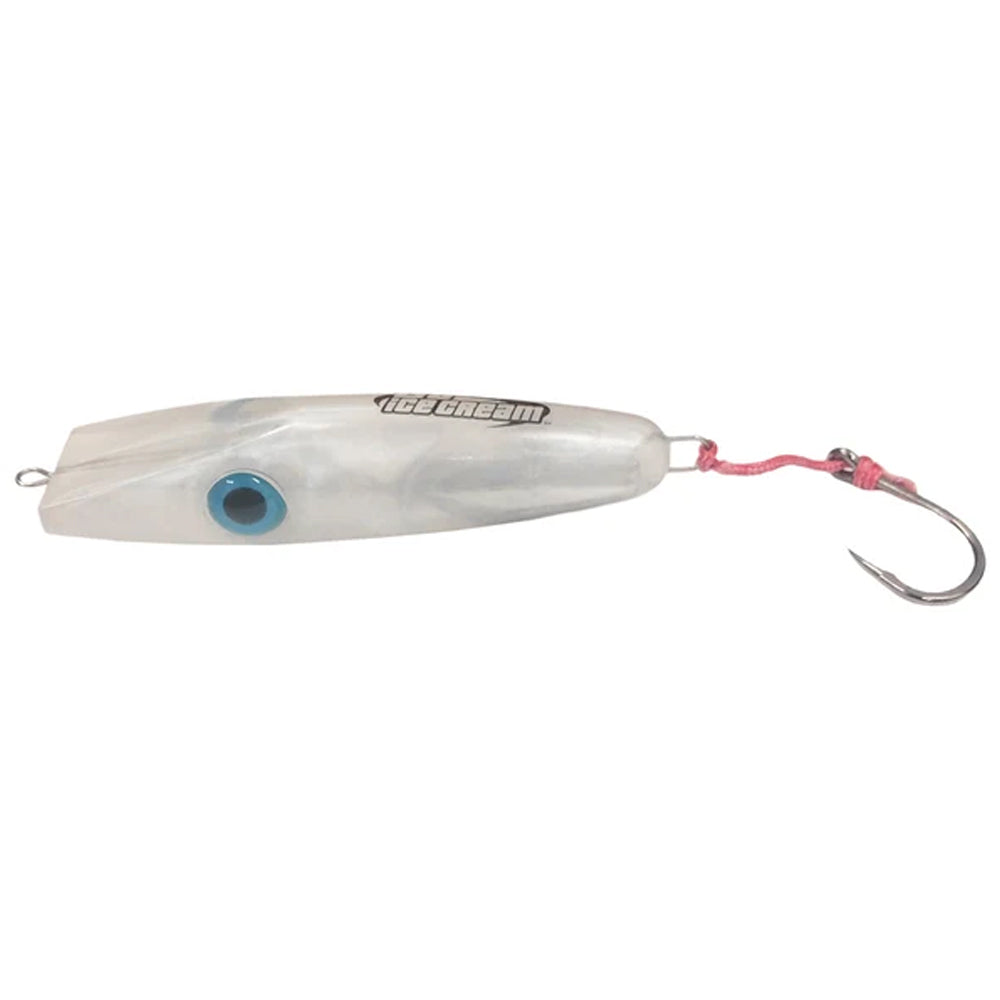
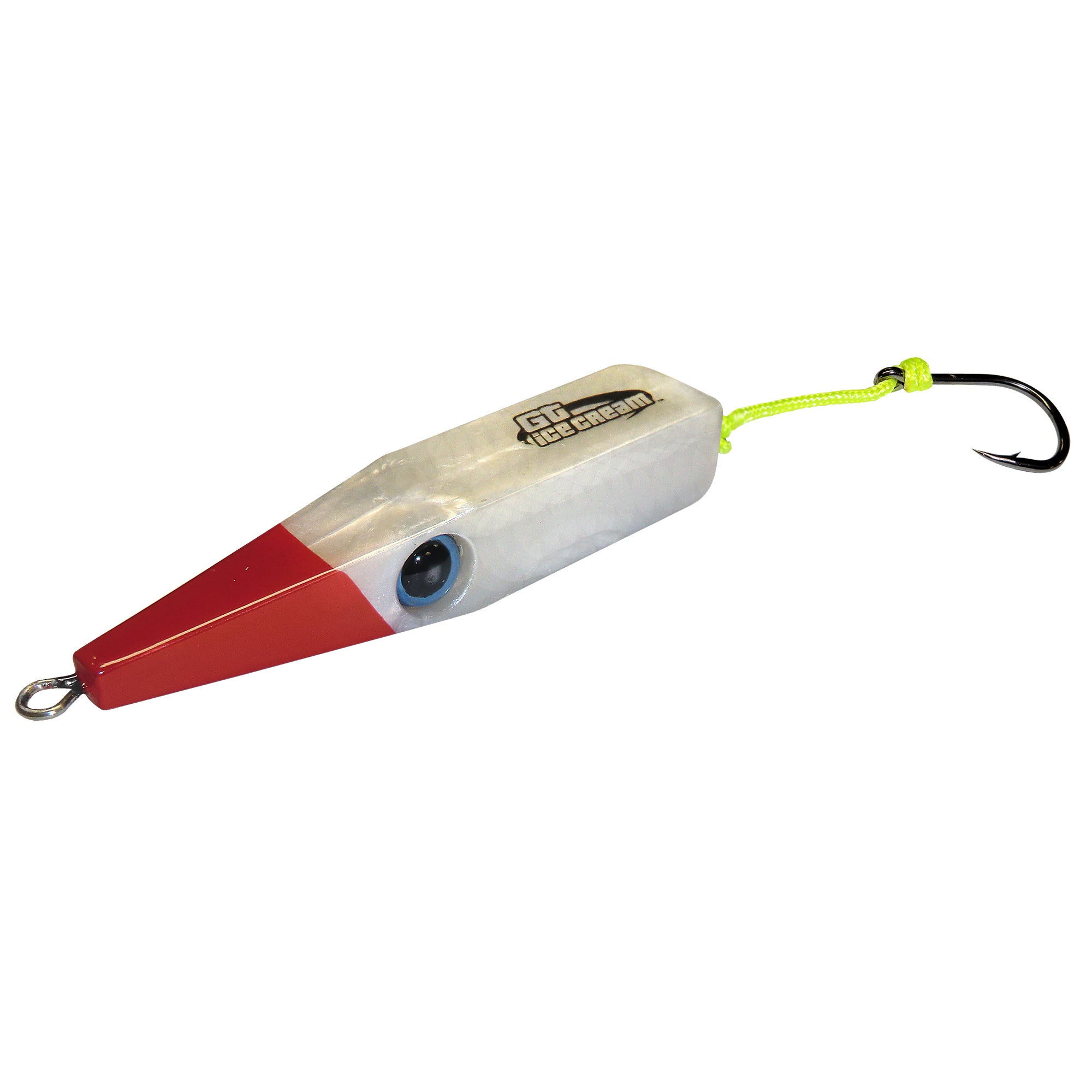
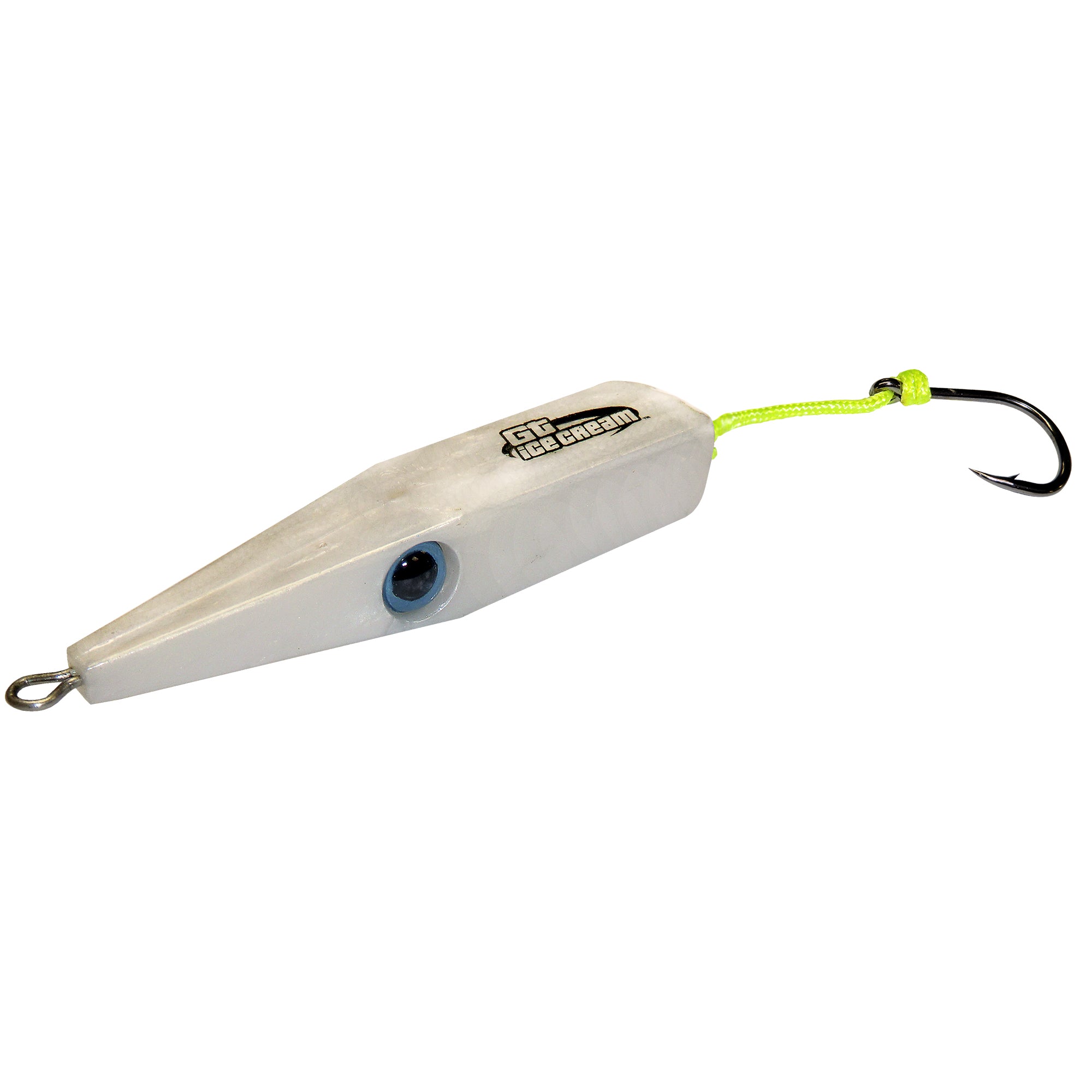
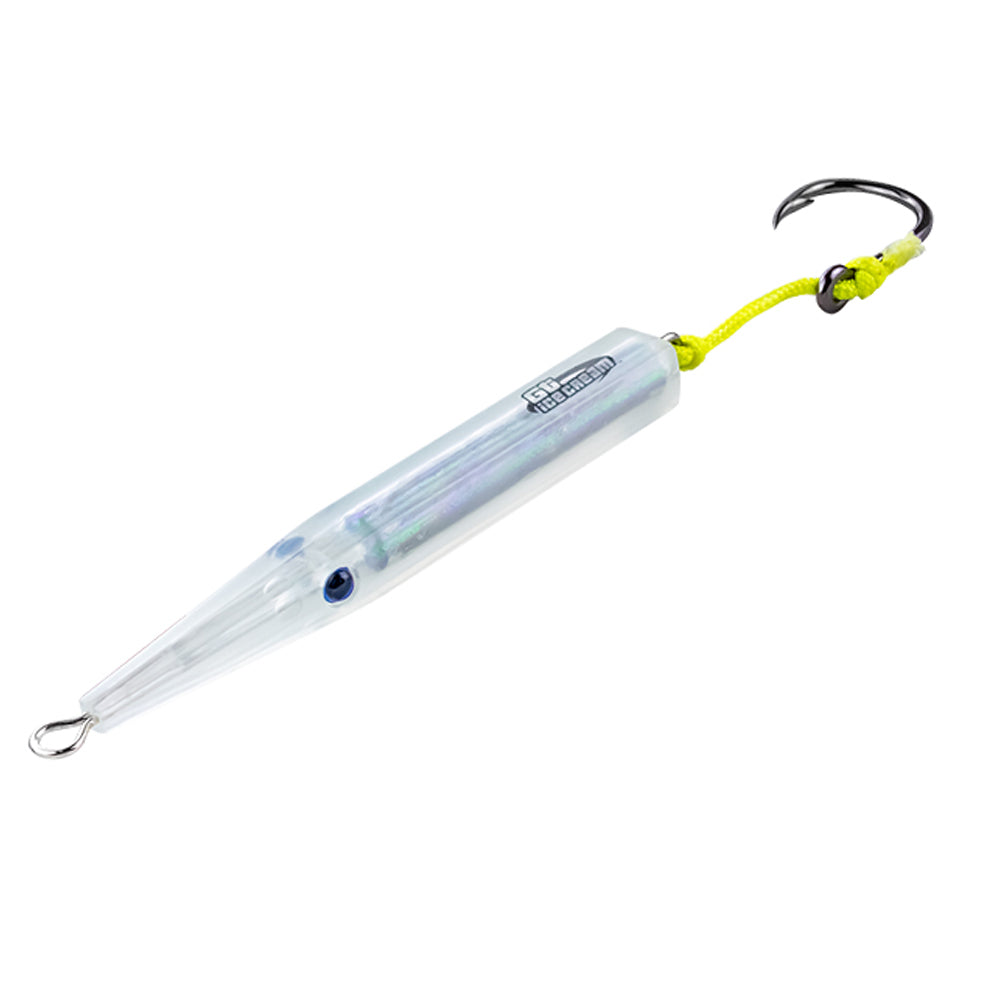
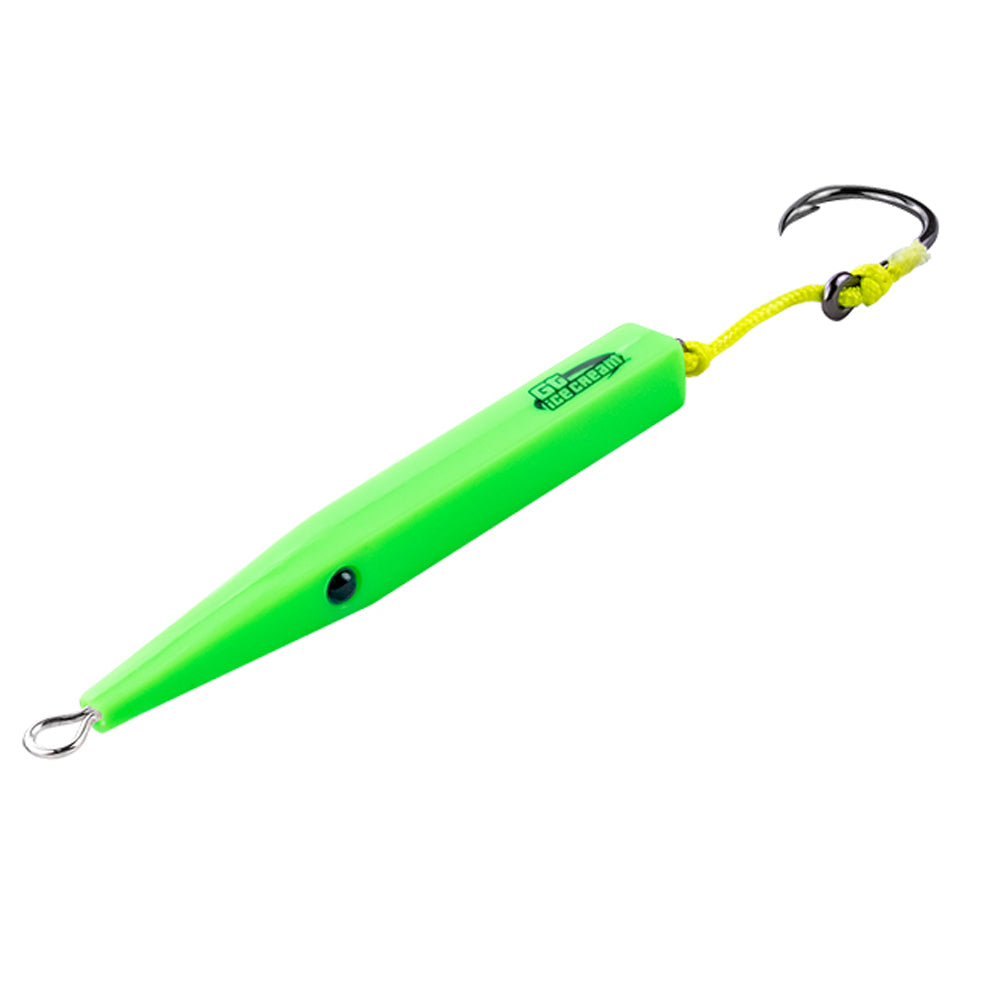
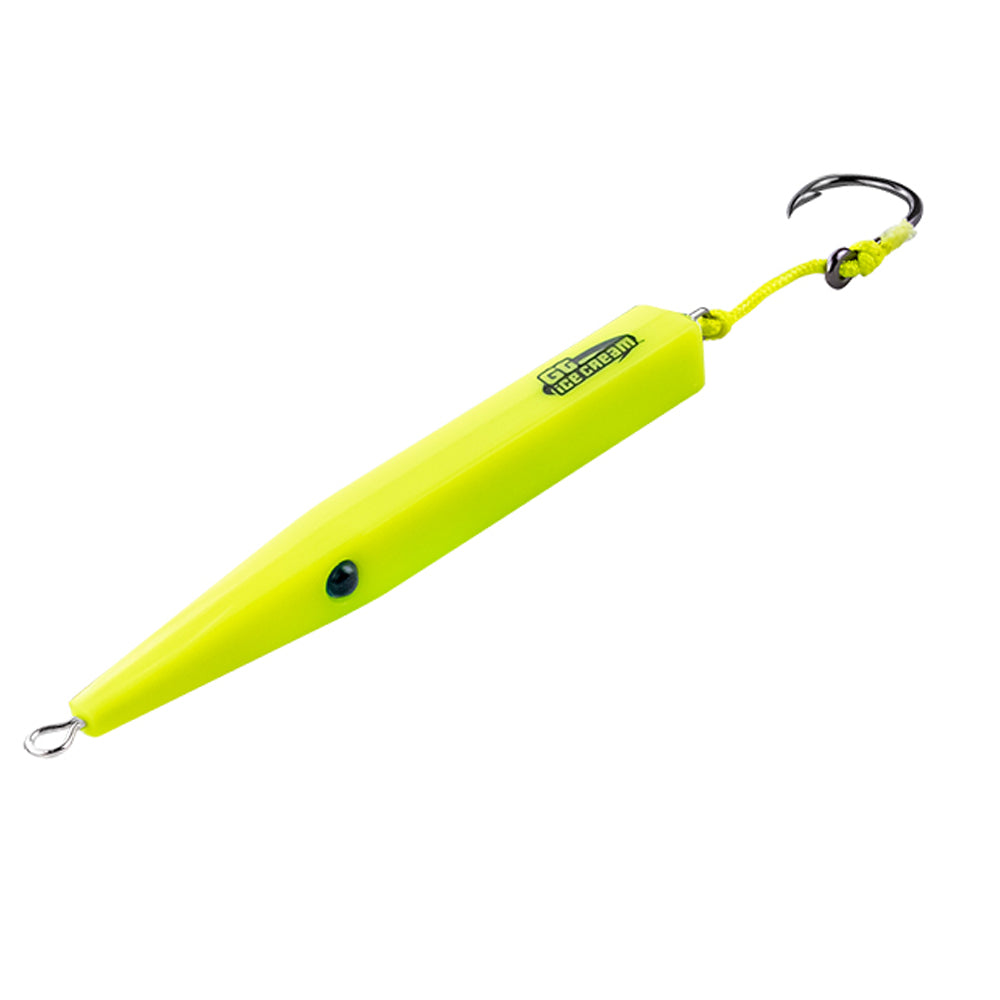
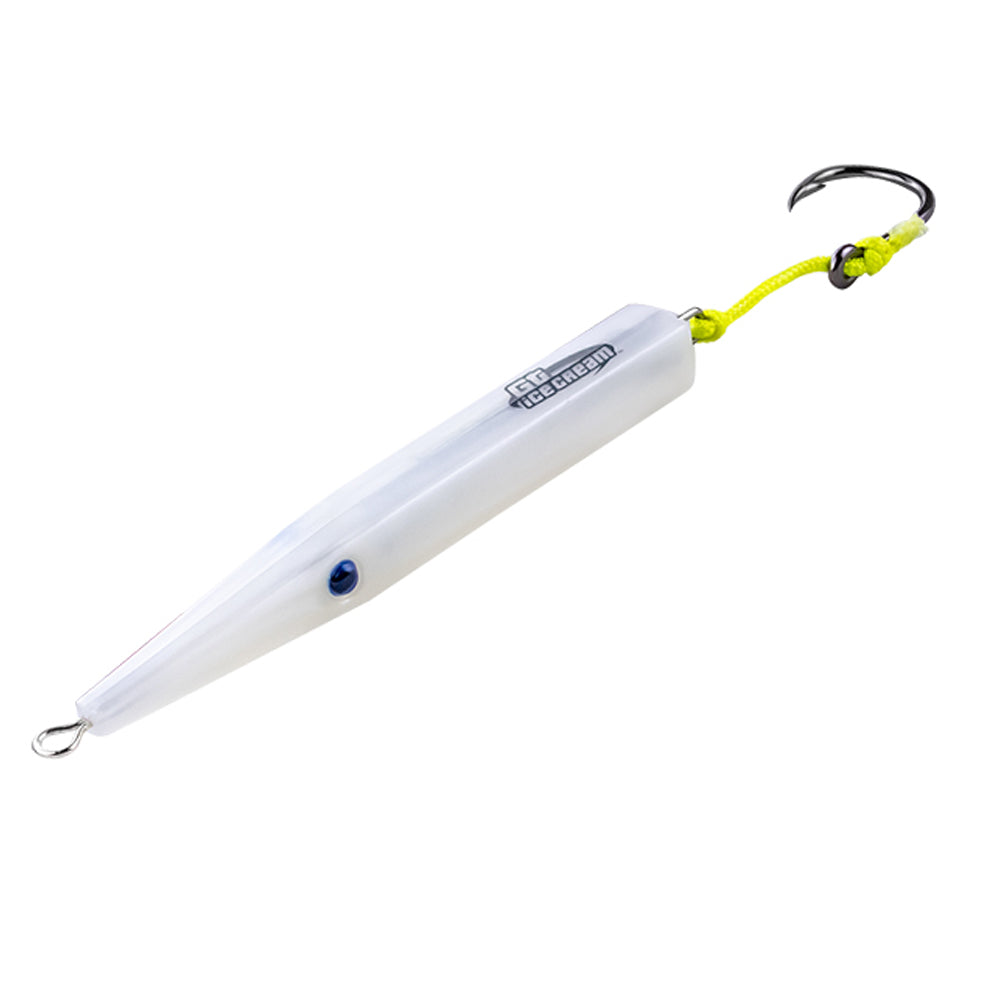
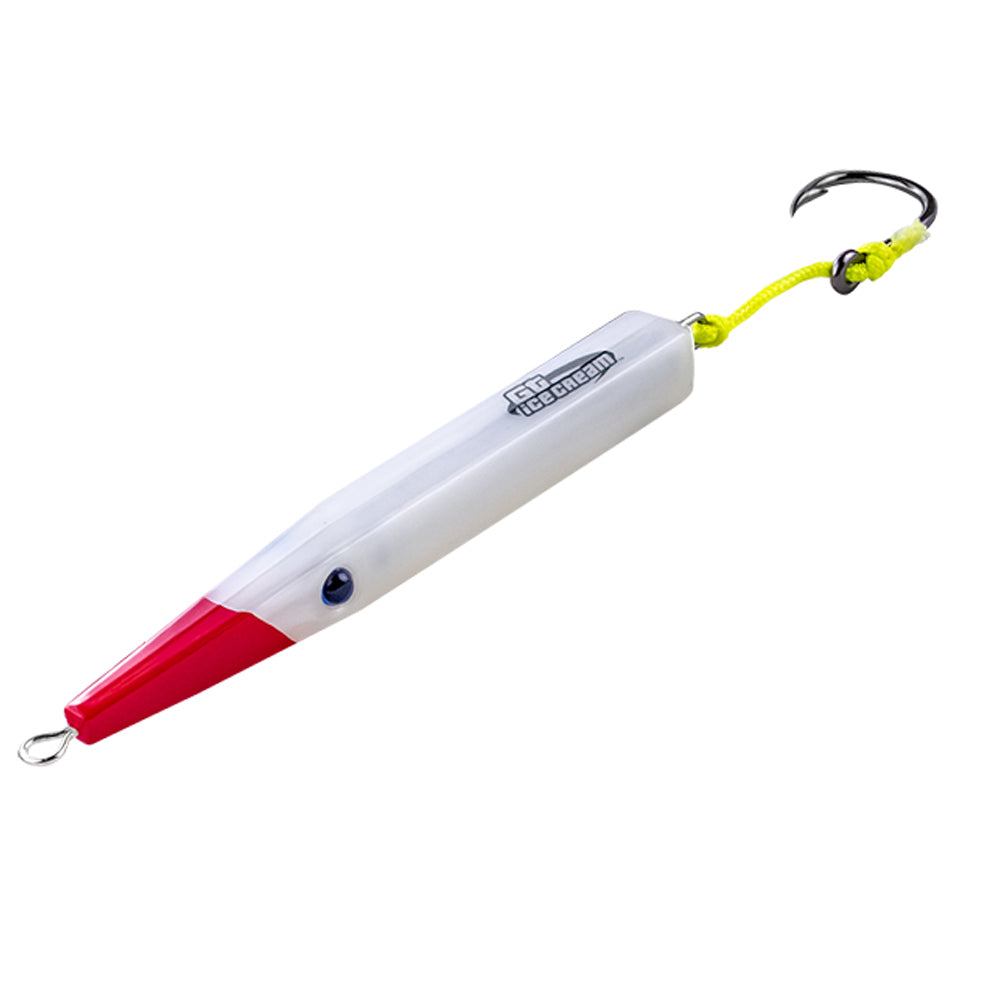
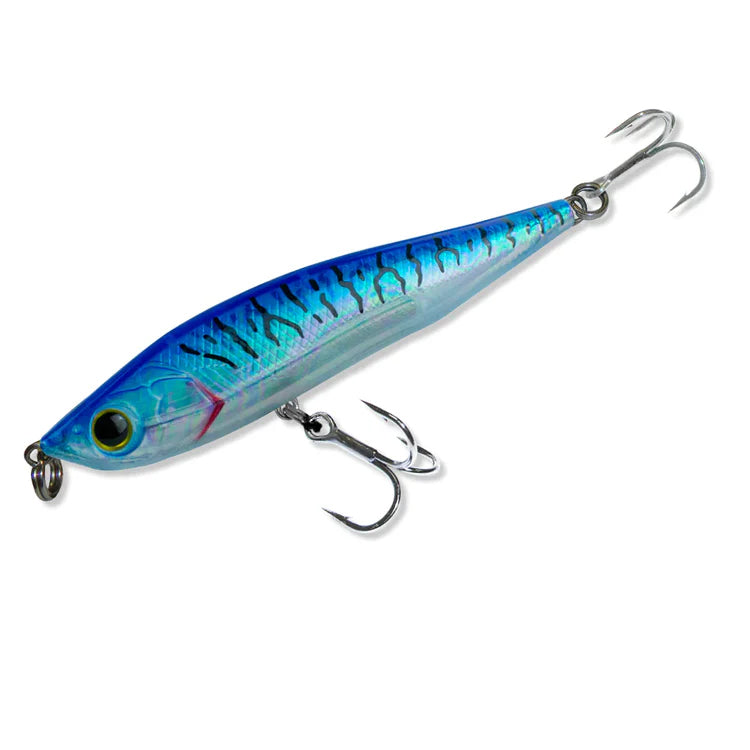
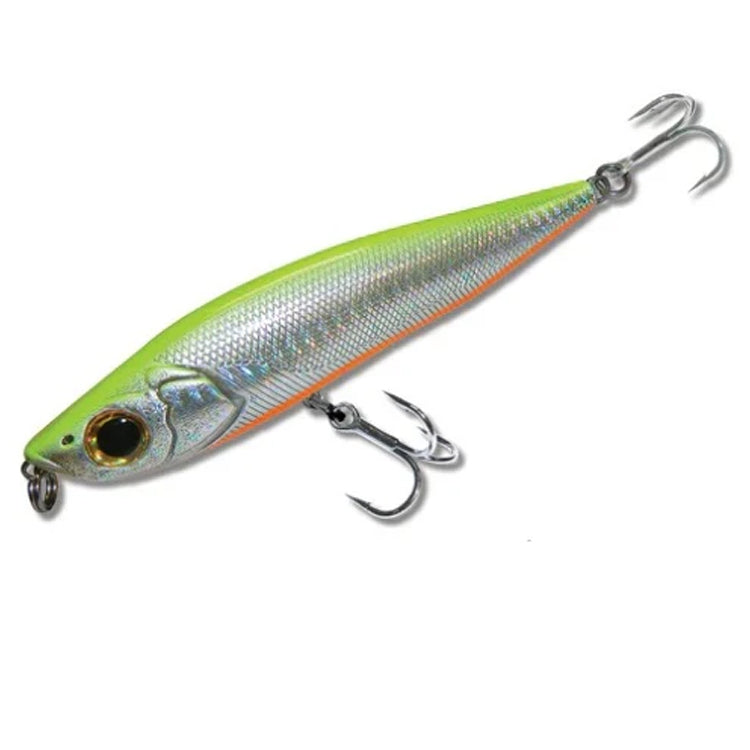

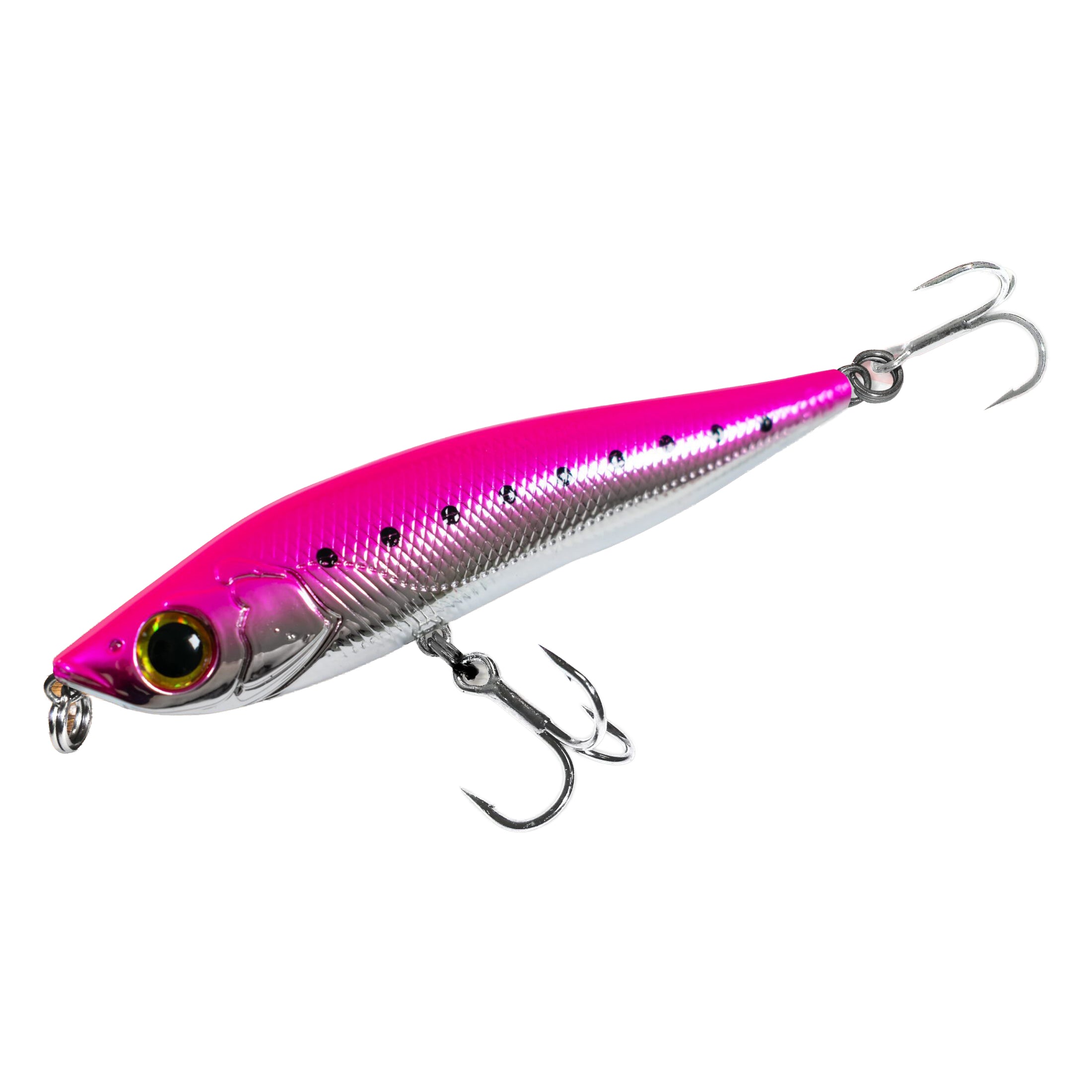
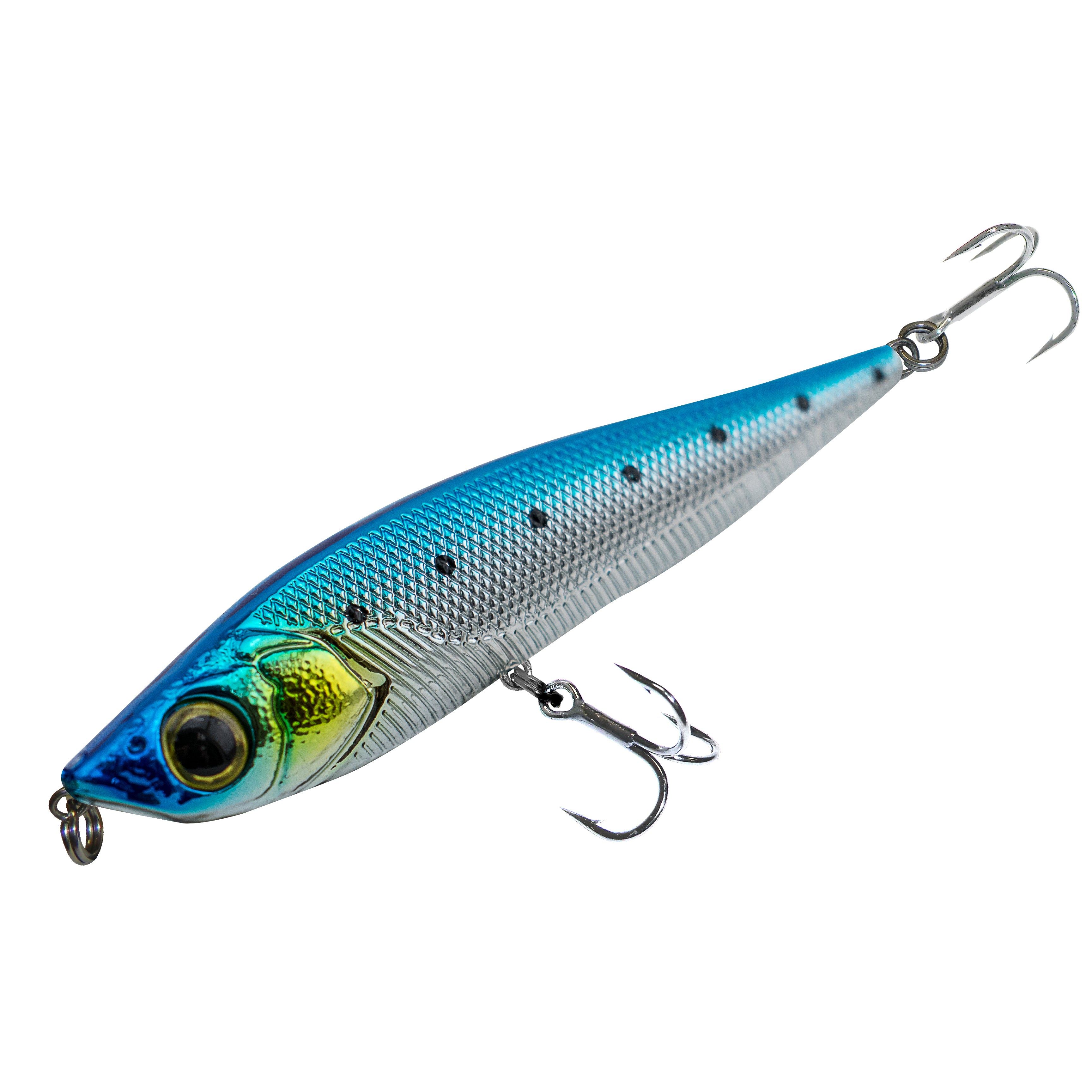
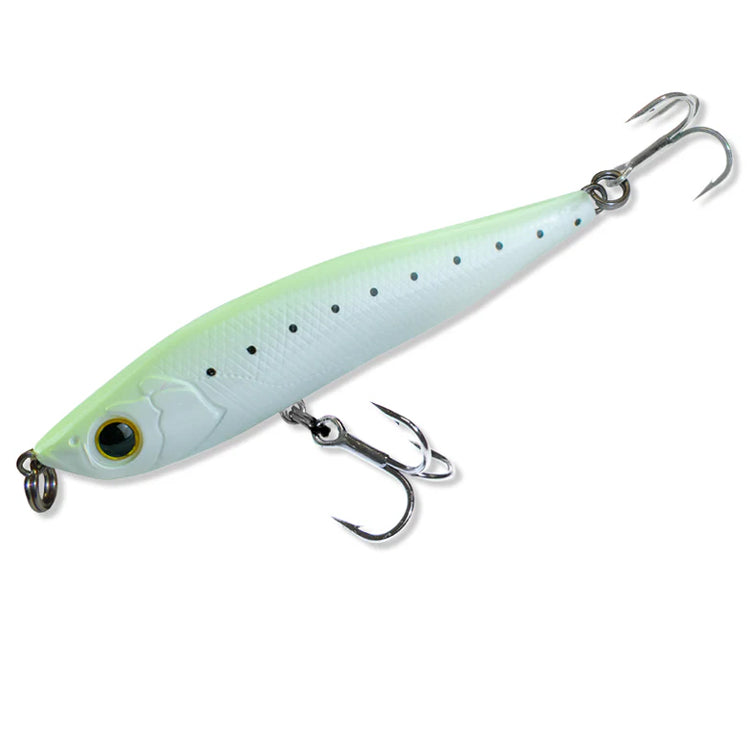
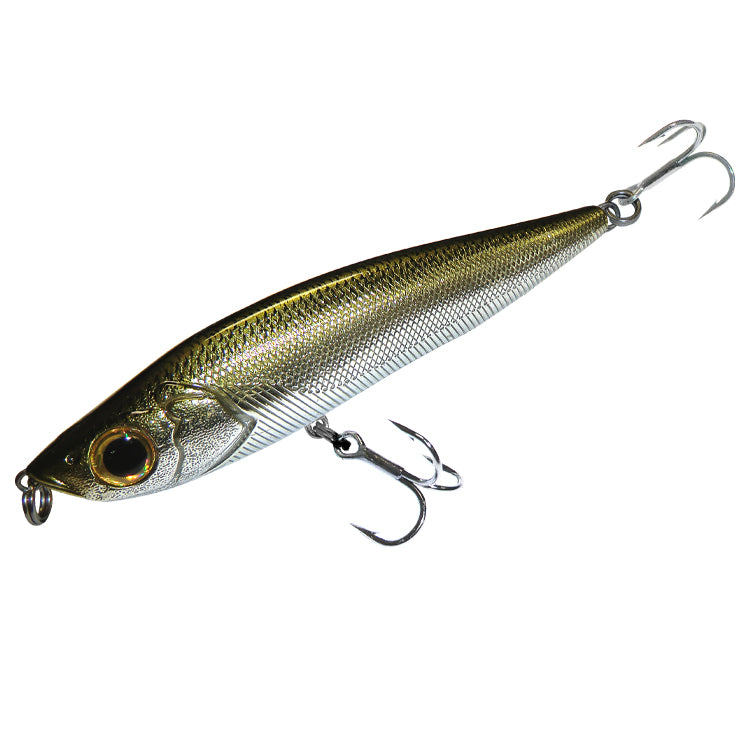
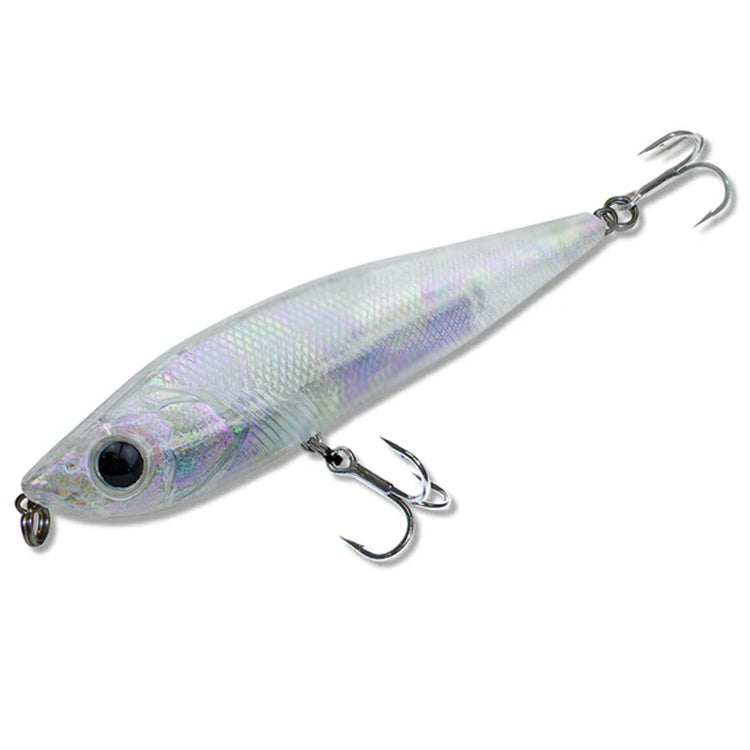
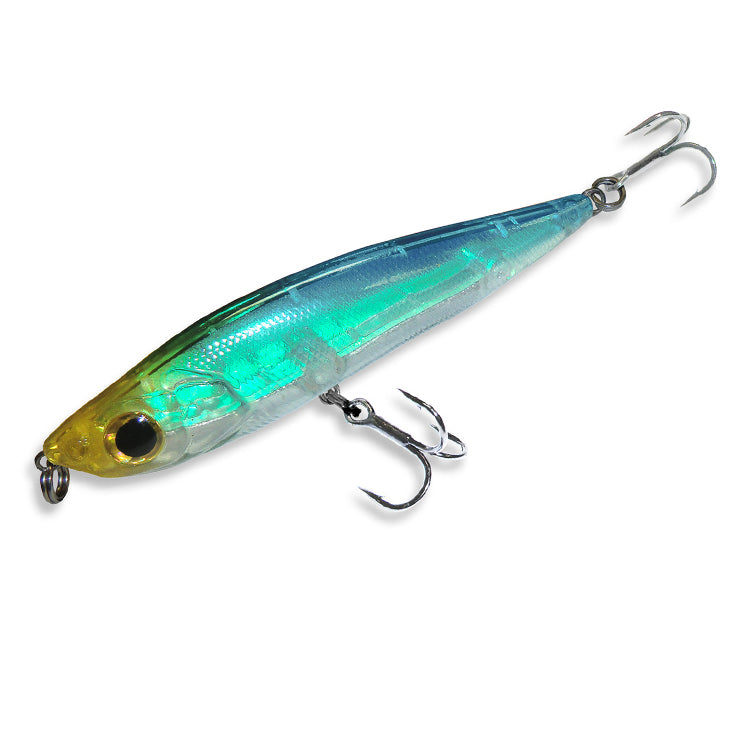
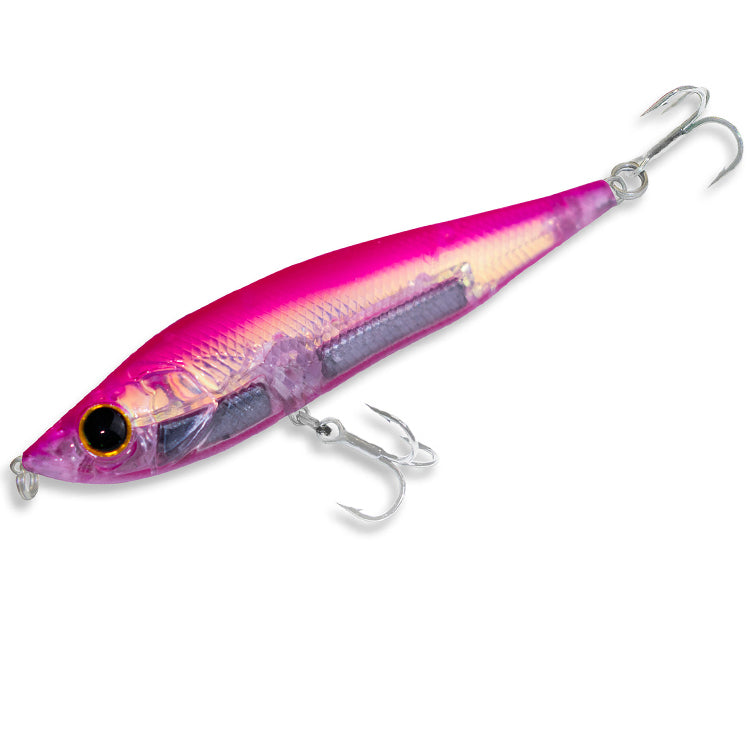
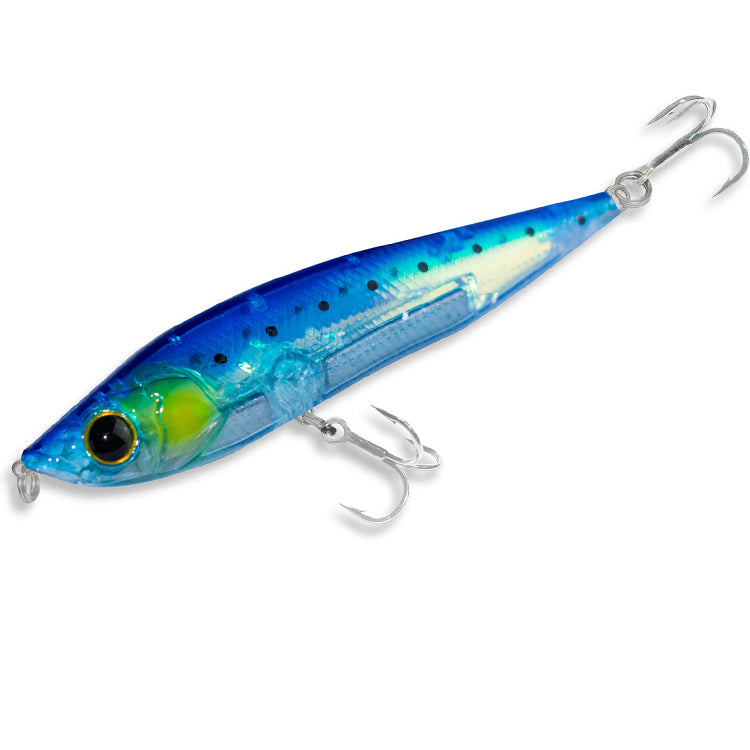
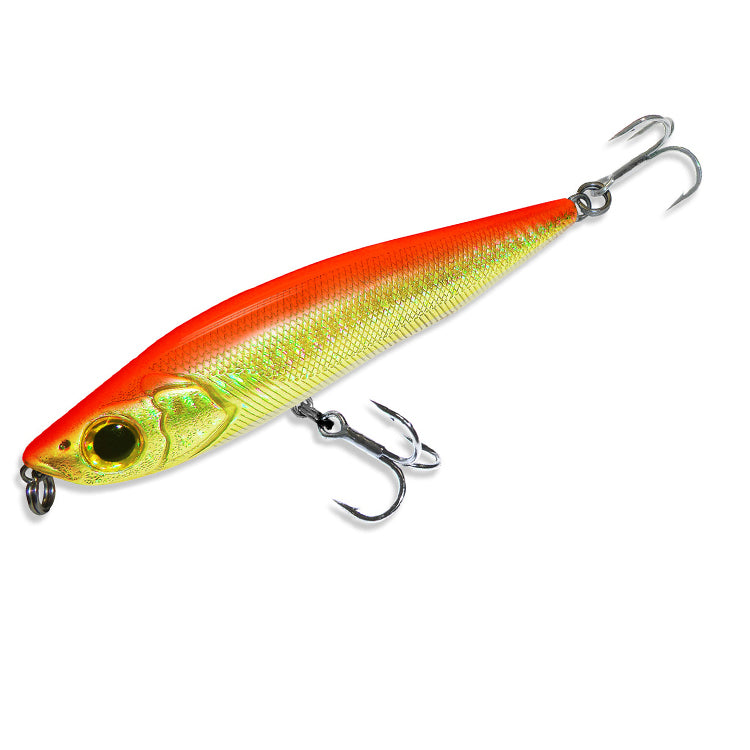
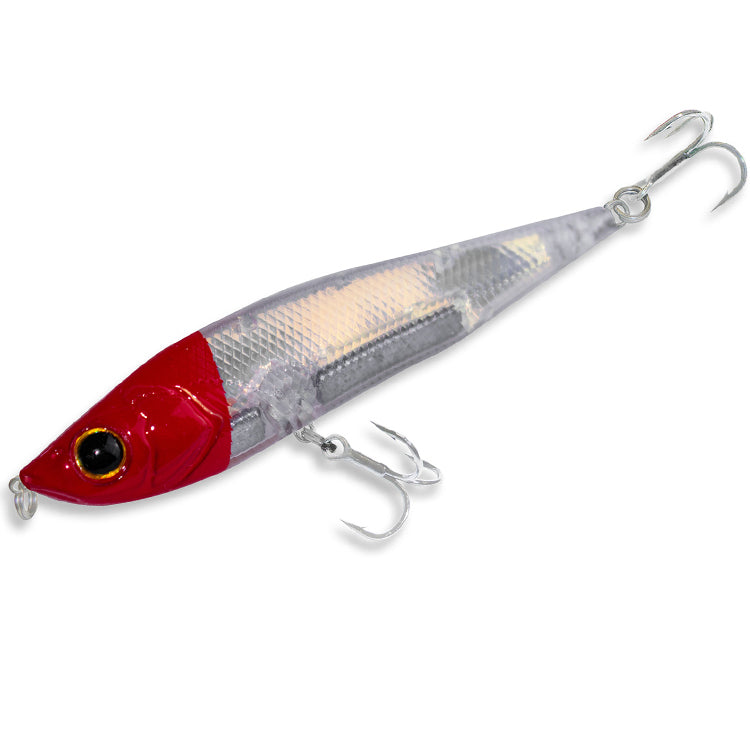
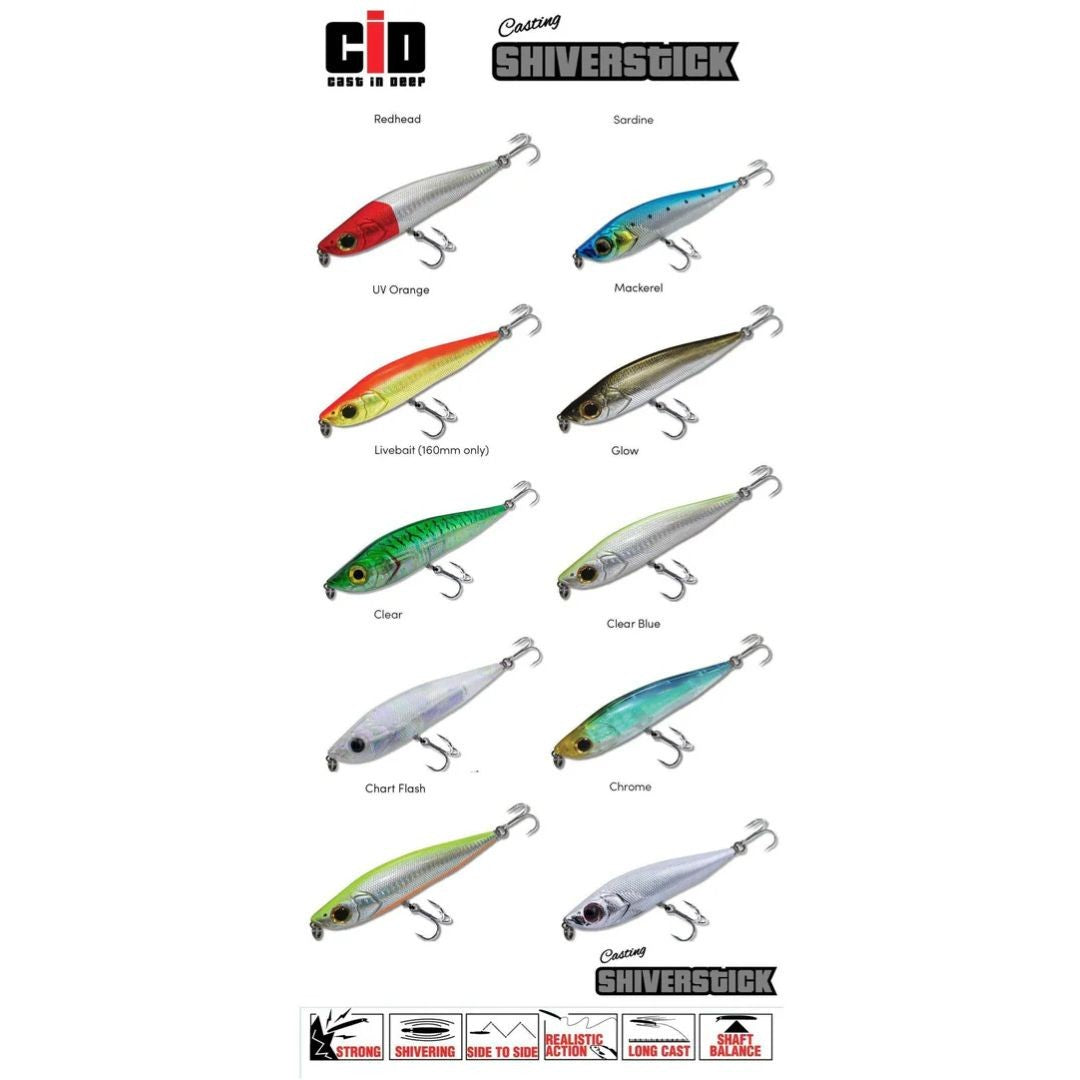
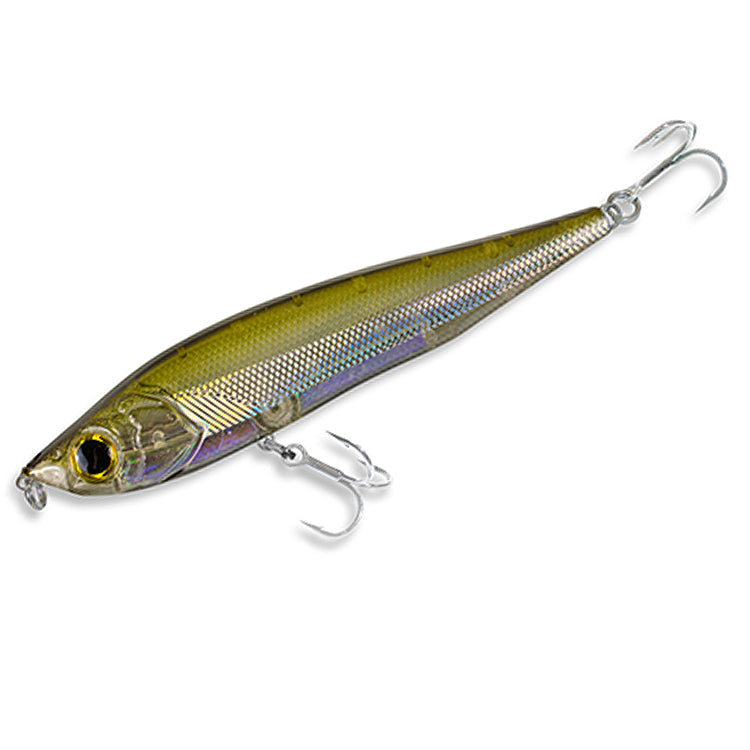
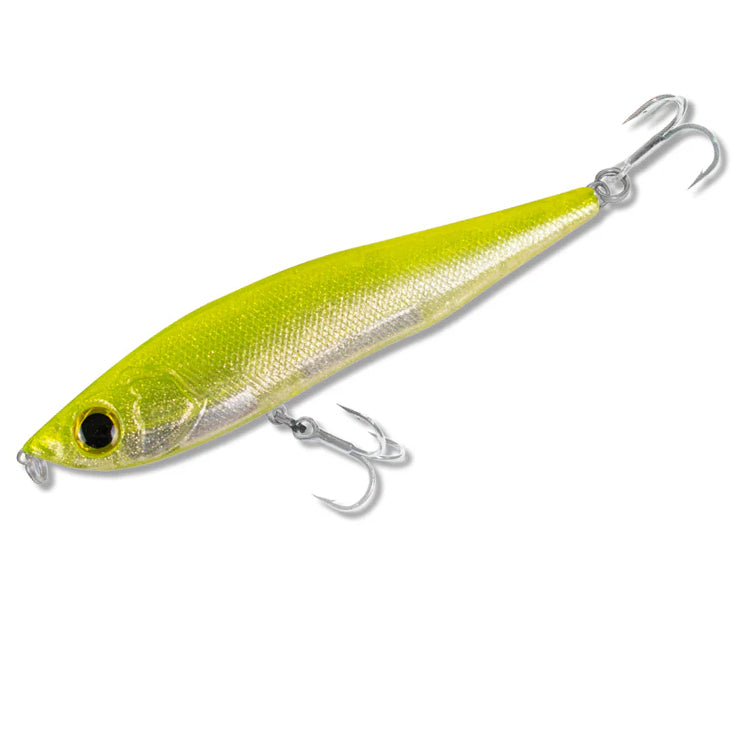
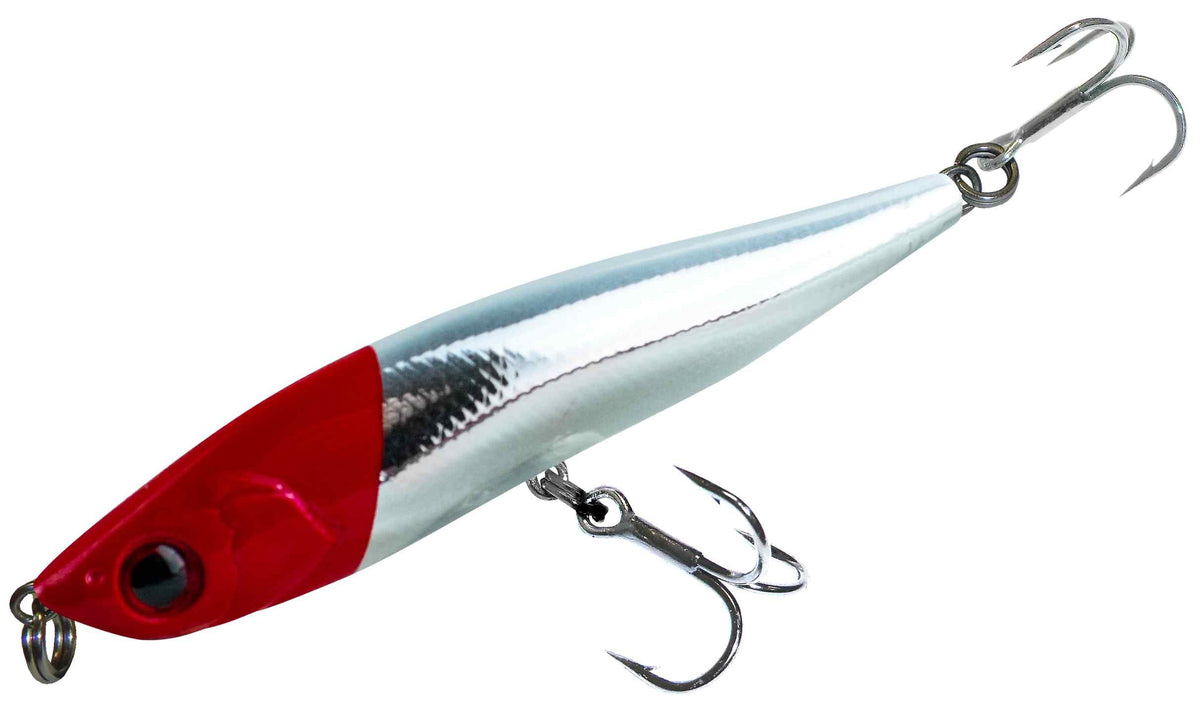
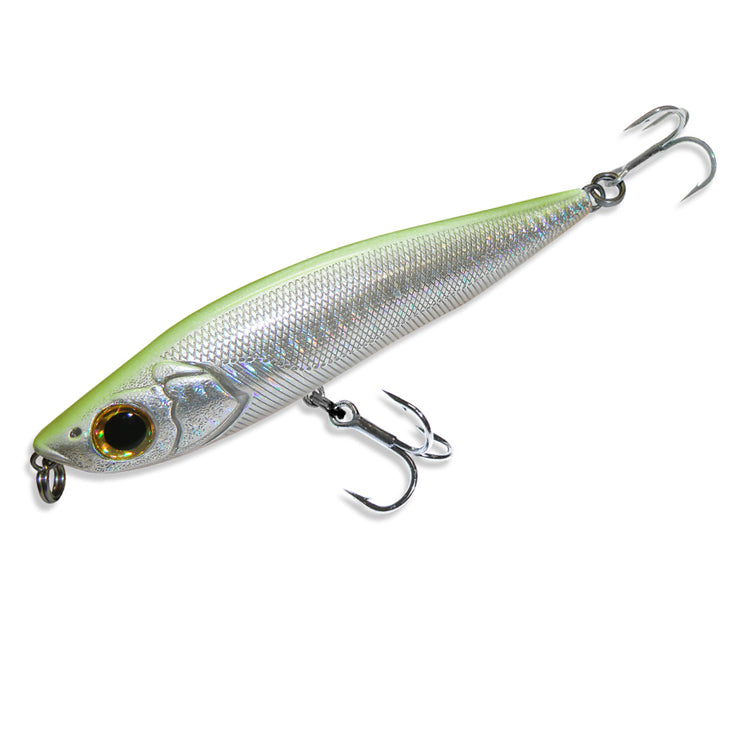
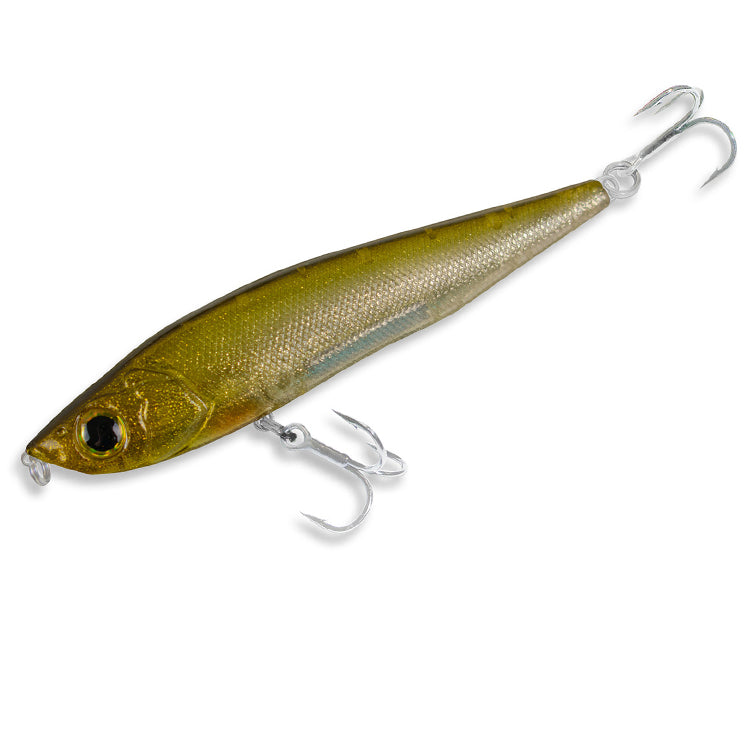
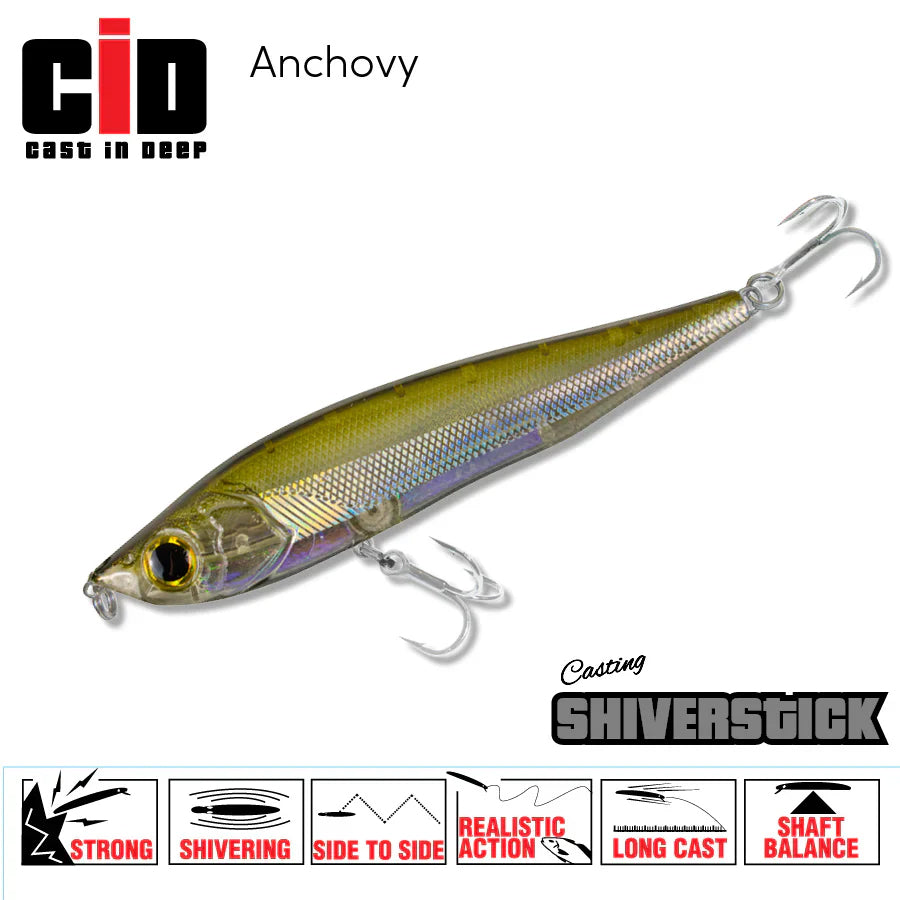

CID is a respected fishing lure brand best known for the GT Ice Cream range and the versatile Shiverstick series. The GT Ice Cream lures originated in South Africa, purpose-built with Teflon construction to withstand the ferocious strikes of giant trevally in the warm waters of the Indian Ocean — the name comes from early testing when GTs hit the prototypes so hard it was "like ice cream to them." CID lures feature super-strong stainless steel through-wire construction and are precision-weighted for long-distance casting.
At Compleat Angler Nedlands, we stock the GT Ice Cream Cone, Needle Nose, and Skinny Needle Nose casting plugs, plus the full Shiverstick range from 65mm through to 160mm. The Shiverstick is a deadly stickbait that shimmers and vibrates on the sink, then darts side-to-side on the retrieve — equally effective from shore or boat. These lures are proven performers on giant trevally, tuna, mackerel, kingfish, and other pelagic species found in WA waters.
Free shipping on orders over $150.
What CID lures are available at Compleat Angler Nedlands?
We stock the GT Ice Cream Cone, Needle Nose, and Skinny Needle Nose casting plugs, plus the complete Shiverstick range in 65mm, 80mm, 95mm, 110mm, 125mm, and 160mm sizes.
What is a CID Shiverstick and how do you fish it?
The CID Shiverstick is a sinking stickbait that produces a vibrating, shivering motion on the sink and a strong side-to-side darting action when twitched. It features wire-through construction for durability and is effective when fished with a twitch-and-pause or steady retrieve.
What species can I target with CID GT Ice Cream lures?
GT Ice Cream lures are designed for giant trevally but are also highly effective on tuna, wahoo, kingfish, mackerel, cobia, and other powerful pelagic species. Their tough Teflon construction handles the hardest strikes.
Are CID lures durable enough for GT fishing?
Absolutely. CID lures are built with Teflon construction that resists chipping, cracking, and rock damage, plus stainless steel through-wire for structural strength. They were specifically designed to handle the brutal strikes of giant trevally and other hard-fighting pelagics.